
Tuesday April 7th 2026
On Wednesday April 1st, Italy lost in penalties to Bosnia-Herzegovina in their World Cup Qualifier. With this loss, Italy would fail to qualify for the World Cup for the third consecutive time, marking the first time in World Cup history that a former winner failed to qualify for three World Cups in a row.
My personal bias aside, this was an alarming thing. Italy used to be the standard for international football. They had the best professional league and one of the best developmental systems in the world. So the question is, what happened?

Italy fails to qualify for a third consecutive World Cup
A bit of background information, Football, or soccer as we call it here in North America, is my second favourite sport to watch after wrestling. It replaced hockey quite a while ago as my second favourite sport and since then, I’ve gone full tilt into the game, both in the professional side as well as the national side.

I’m a fan, I’m not going to lie
Why this is relevant is because Italy’s fall can be seen as a warning for many sports. Complacency or failure to evolve and adapt can be a death sentence and yet it’s more common than we think. If a football-mad country like Italy can sink so low, then what can happen to other sports who don’t occupy the top niche and therefore may not receive as much attention?
The tragedy of this, is that it wasn’t all that unexpected. When Italy began to decline years ago, many people began to voice their concerns. One in particular was Roberto Baggio. For those who don’t know. Baggio has often been in the discussion when many Italian football aficionados talk about the greatest footballers of all time. Not just the greatest Italian, but the greatest ever. He came through the academy system, played in Serie A during the 1990s, often considered to be when the league was at its peak as well as leading Italy to the 1994 World Cup final. With all these accolades, his credentials are definitely sound. When the decline became evident, Baggio was brought in as a consultant to determine the causes and come up with some potential solutions in order to stop the rot.
Baggio would attack this problem with the same dedication and passion that he displayed during his playing days, producing a nine hundred page document of all his findings in 2011. In this document, some of the things he detailed were designed to improve all levels of the Italian Football from the grassroots to the professional level. They were the following:
- Investment into Youth Development and Academies
- Less rigid structure in the instruction of youth players
- Scouting and talent assessment at various levels
- Creating a homegrown system to limit the amount of foreign players present in Serie A in order to give young Italians a chance at the professional level
When his document was presented, the Italian Football Federation basically chucked the document in the garbage, figuratively speaking as they chose to disregard all of his advice. Baggio would resign shortly after, citing frustration of not being able to fulfill his mandate.
So how does this apply to wrestling? Well, we can see many parallels in other sports, where a decline starts in a sport and failure to adapt will set back that sport in a country for years afterwards. In addition to this, some of suggestions that Baggio made can be applied to our sport, particularly in the realm of youth development.
My experience in sports governance has seen the warning signs in other sporting federations in which change is very slow, as the older generation tends to favour the conservative approach when talking about youth development. If the results are still there, then its easier to disregard the need for change. It’s when results start to decline, then sometimes the problem might be too far along. Let me be clear, while I’m always and advocate for change, oftentimes I see the knee-jerk reaction in which some tried and true policies are tossed out for the shiny new thing. I believe that in order to move forward, we can’t forget all the lessons of the past, if that makes sense. After all, not everything old is bad, and not everything new is good either.
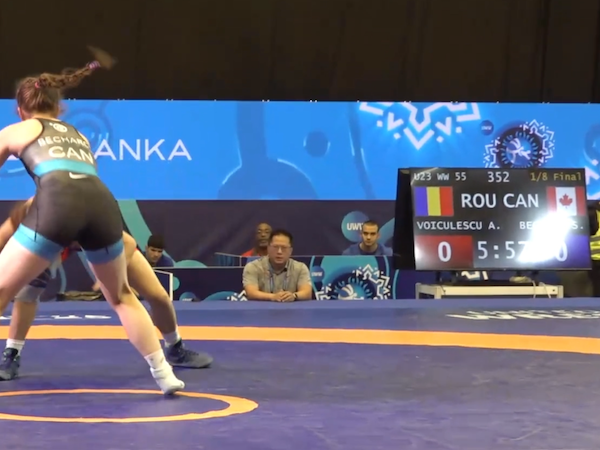
Getting our athletes to that next level is the trick
The one thing in particular that stands out is Baggio’s call for the reinvestment into youth development. In Canada, if you’re a smaller sport, government funding often only goes to results at the high-performance level. This is designed to reward sports for producing high-performance athletes at the world and Olympic level, which rightfully it should. However, it completely disregards investment into youth systems, the very systems in which many of these athletes get their first opportunity to compete. I think that there needs to be a balance between the two as one cannot exist without the other.
With that being said, I do think that wrestling needs to evolve. Ironically, we still get some results at the younger levels, with our Cadet teams taking medals at the Pan American Championships, so clearly our youth levels are relatively good. It’s as the move to the higher age groups that results are harder to come by. This is in spite of the fact that competing on those teams are now more expensive than ever. Investment in the youth levels has virtually dried up and this might be something that has to be addressed as we may get a system in which we don’t have the best athletes competing, merely the ones that can afford it.
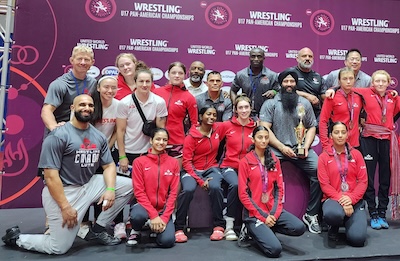
Our Cadet teams are still producing at the international level
In Quebec, the increase in the number of high schools that participate in wrestling is a good start. High schools allow the maximum amount of coverage and constitute solid youth development. While this is encouraging, we need to keep growing and evolving in order to insure the highest quality. But that’s an article for another time.
While Italy’s decline is a warning, there are signs of hope, also coming from the world of football. When Germany began to see a decline in their international results in the late 90s, they sprung into immediate action. They reinvested in their academies, created rules which limited foreign players and encouraged academy development, all while sending their young coaches abroad to learn different tactics as well modernize coaching. The result was a third place finish in 2010, and then winning the World Cup in 2014. While recently their results have declined, they weren’t afraid to take that initial step, looking more a the Long Term Development of their athletes instead of sticking to polices which held them back. Maybe, there’s something that we in the world of wrestling can learn from this.